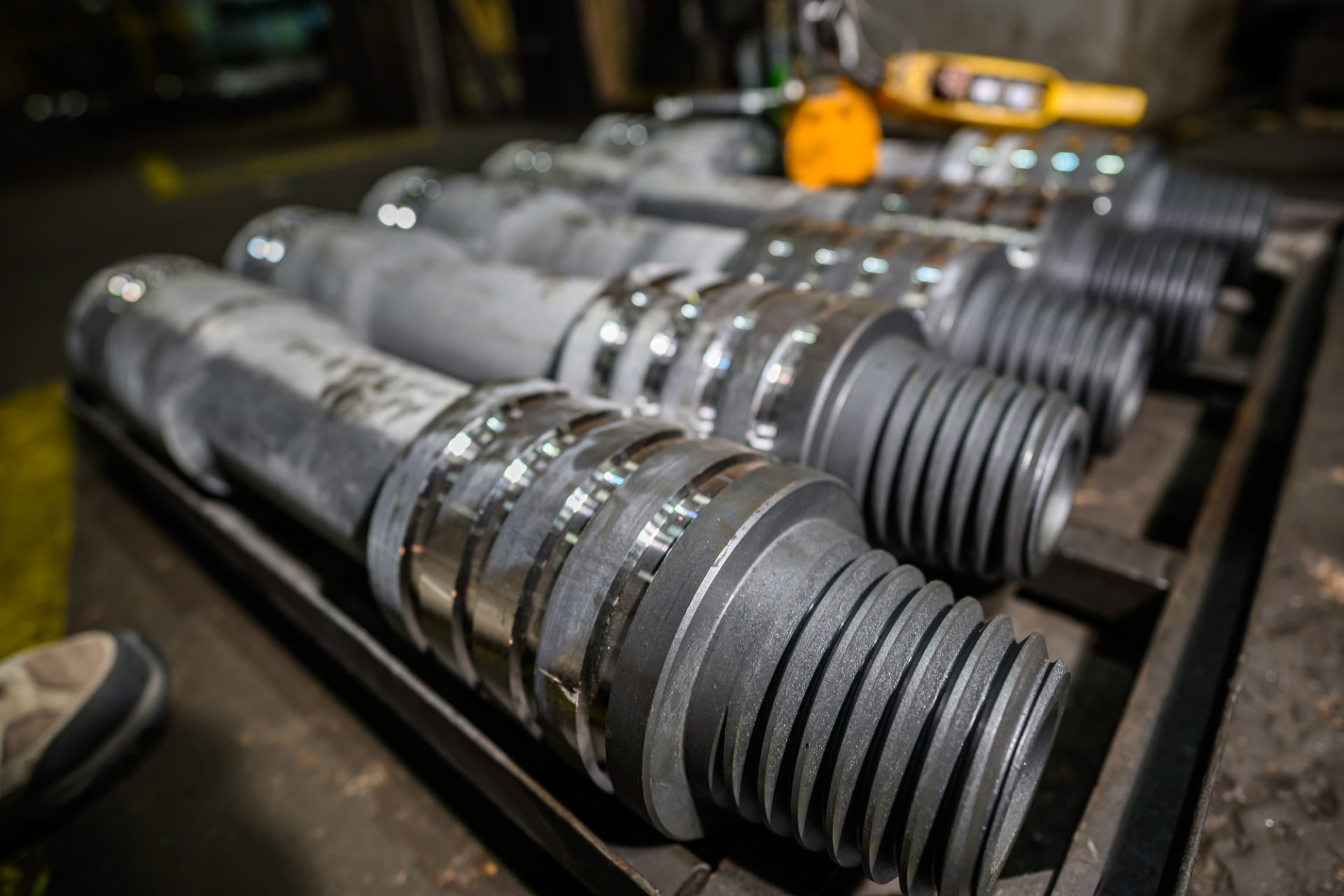
Most helical piles look identical on a pallet. Round or square shaft, helix plates, a coupling, a coat of paint or galvanizing. The differences that decide whether a foundation performs are the ones you cannot see from the yard.
We manufacture these, so read this with that in mind. What follows is what we would interrogate if we were buying rather than building, and several of these questions have answers that work against sloppy manufacturers regardless of whose name is on the invoice.
01What actually differs between manufacturers?
Four things carry structural consequences.
- The coupling. How shaft sections join to each other. This is the highest stress point in any pile and the most common failure mode in the field.
- Code listing. Whether the system holds a current ICC-ES evaluation report, which determines how an inspector treats it.
- Corrosion protection. Bare steel, painted, or hot dip galvanized, and to which standard.
- Documentation. Published capacity tables, torque correlation factors, bracket ratings, and access to engineering support when a project gets unusual.
Everything else, lead time, pricing, regional stocking, service, is a commercial question. Real, but recoverable. A coupling that fails at depth is not recoverable.
02Why the coupling is the whole argument
A helical pile is installed by rotating it into the ground under high torque, then loaded in compression, tension, or both. Every one of those forces passes through the joints between shaft sections.
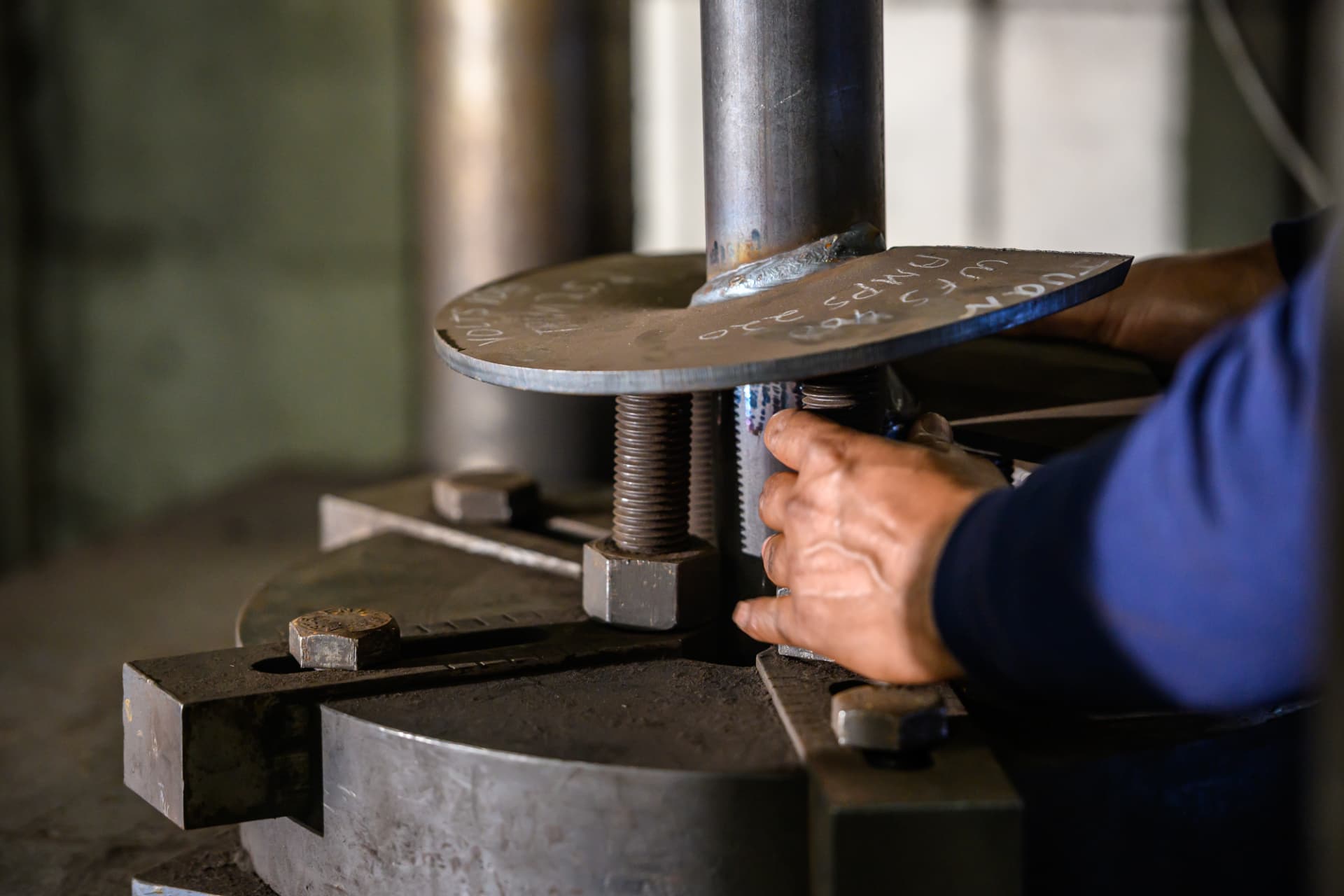
Conventional manufacturing joins those sections with a fillet weld: molten filler metal deposited around the outside of the joint. The weld is a bead on the surface. Its strength depends on penetration, operator skill, and consistency across thousands of units. Under high torque installation into dense soil, that bead is what is holding the pile together.
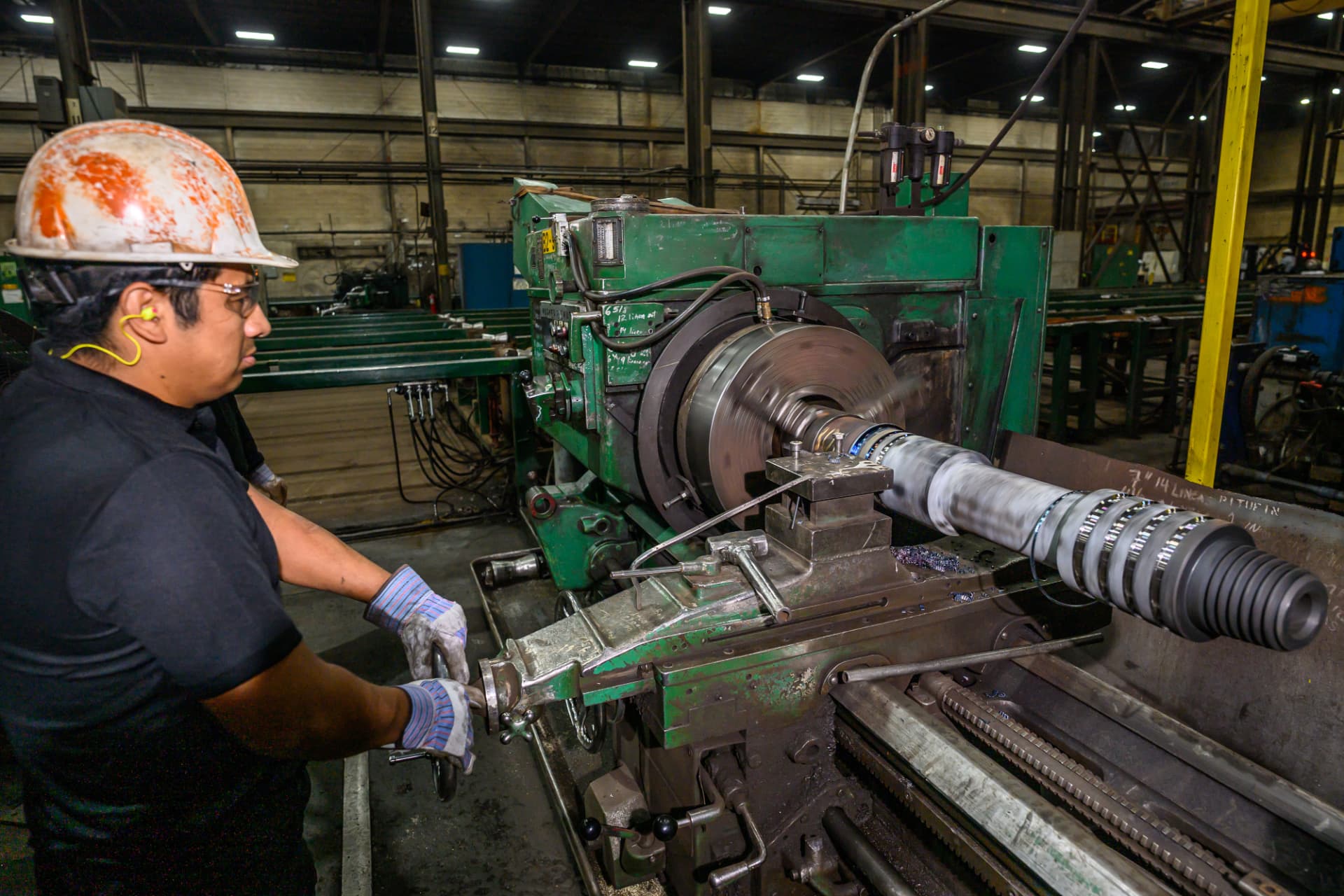
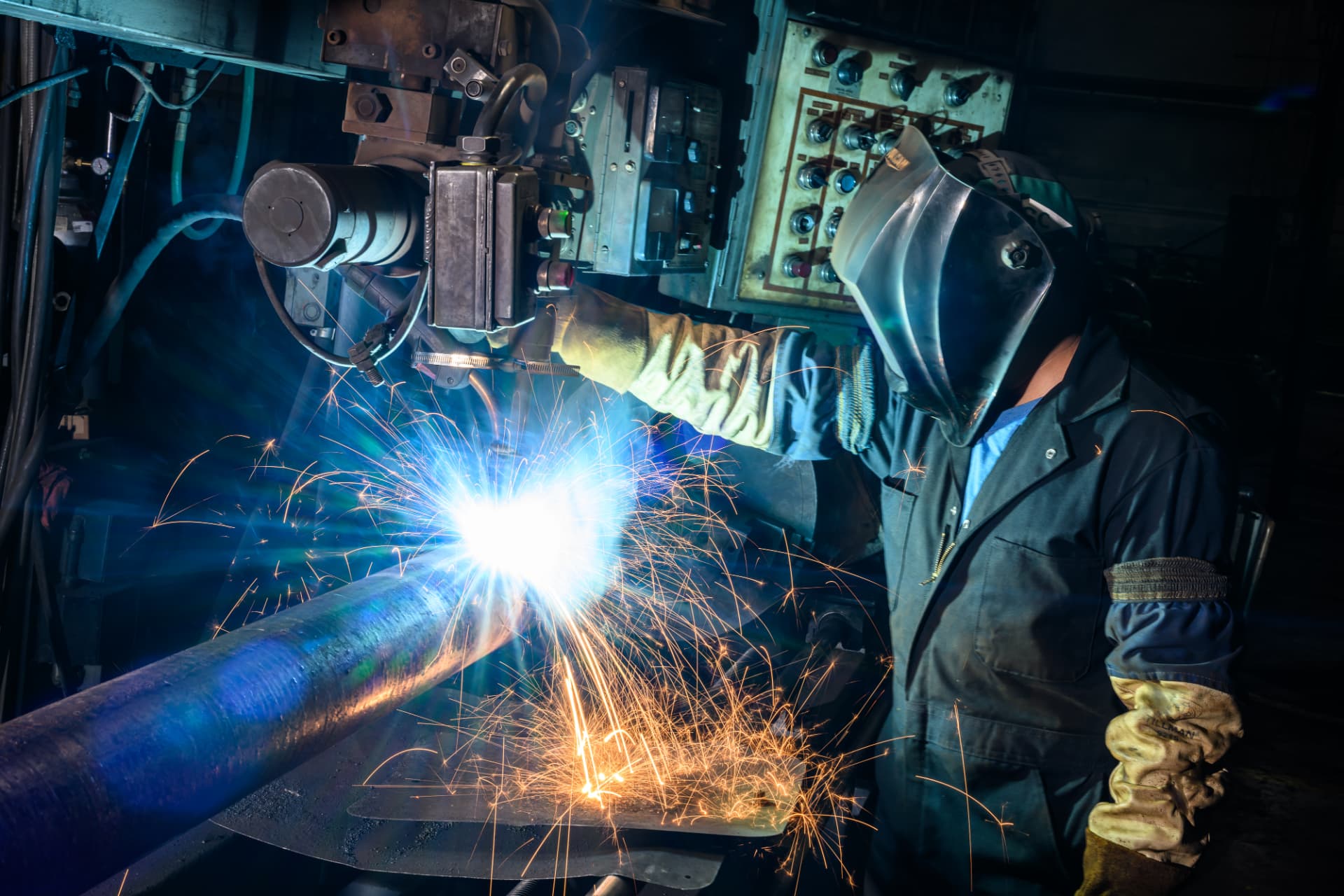
Inertia welding is a different process entirely. It is a friction welding method: one section is spun at high speed and driven axially into the other, and the heat generated at the interface forges the two pieces together across the full cross section. There is no filler metal and no bead. The joint becomes continuous parent material, and it is produced by machine parameters rather than by hand, so unit two thousand is identical to unit one.
Helical Anchors holds the patent on applying this process to helical pile manufacturing, and it is the reason our shafts carry the torque ratings they do. The relevant question for any manufacturer, ours included, is simple: what is the process, and what is the rated torsional capacity of the coupling relative to the shaft? A manufacturer who quotes shaft capacity but goes quiet on coupling capacity has told you where the weak point is.
03What does ICC-ES listing actually mean?
An ICC-ES evaluation report is third party verification that a product meets the requirements of the building code. For deep foundations it covers capacity, materials, manufacturing quality control, and installation requirements.
Practically, it decides how a project gets approved. A listed system lets a building official approve the installation against the report. An unlisted system frequently requires project specific engineering evaluation, which costs time and money on every job, and can stall a permit.
Helical Anchors products are listed under ICC-ES ESR-3982. When evaluating any manufacturer, ask for the report number, then confirm it is current and that the specific product and configuration you intend to use is actually covered by it. Reports have scopes. A manufacturer holding a listing on one product line does not mean everything in the catalog is listed.
04How should corrosion protection be specified?
This is where quiet cost cutting happens.
Hot dip galvanizing to ASTM A123 for structural shapes and ASTM A153 for hardware is the standard for aggressive soils, coastal environments, high water tables, and any project with a design life measured in decades. Galvanizing adds cost. That cost is the point.
Bare steel is appropriate in benign soils on shorter design lives, and specifying it is a legitimate engineering decision when it is a decision. It is not legitimate when it shows up silently in a substitution to hit a number.
Two questions settle this: is the galvanizing done to A123, and is the coating thickness documented. A manufacturer who galvanizes properly will answer both immediately.
05What documentation should come with the product?
A manufacturer is selling engineered capacity, not steel. The paperwork is the product.
- Published capacity tables covering each shaft size and helix configuration in compression and tension.
- Torque correlation factors for every shaft size. Installation torque is how capacity gets verified in the field, through the relationship between final torque and ultimate capacity, with factors generally falling between 8 and 12 depending on shaft size and type. Without a published factor, torque readings mean nothing.
- Bracket and cap ratings stated independently of shaft capacity, since on repair work the bracket is frequently the governing element.
- An engineering manual with design guidance, installation tolerances, and detailing. Ours is in the technical library, free and without a form in front of it.
- Access to an engineer. Unusual soils, high uplift, seismic, marine, and heavy lateral load projects all generate questions the tables do not answer. Whether a manufacturer will get a real engineer on the phone is worth more than a catalog.
06Does domestic manufacturing matter?
On three counts.
- Lead time and schedule risk. Domestic production means a special configuration, an extension run, or an emergency order on a stalled job measures in days, not in ocean freight.
- Traceability. Material certifications and quality control records that trace back to a facility you can visit are a different category of assurance than a certificate accompanying an import.
- Funding eligibility. Federally funded infrastructure, transmission, and utility scale projects carry domestic content requirements. A foreign made pile can disqualify a bid outright regardless of how the product performs.
Helical Anchors manufactures in Minneapolis under ISO 9001 quality management, with AISC certification. That is verifiable, which is the only reason it is worth stating.
07The eight questions
Bring these to every manufacturer under consideration, ours included.
- What process joins the shaft sections, and what is the coupling's rated torsional capacity relative to the shaft?
- What is the ICC-ES report number, and does it cover the specific products and configurations we intend to use?
- Is galvanizing done to ASTM A123, and is coating thickness documented?
- What is the published torque correlation factor for each shaft size?
- Are bracket and cap ratings published independently of shaft capacity?
- Is the engineering manual publicly available, and can we speak to an engineer on a specific project?
- Where is the product manufactured, and what quality certifications does the facility hold?
- What is the standard lead time, and what happens when a job needs something non-standard?
Any manufacturer who answers all eight without hedging is a manufacturer worth specifying. The ones who deflect on question one are telling you the most.
Specification is where a foundation is actually decided. Everything after it is execution against a choice already made.
Our engineering team works directly with design professionals and contractors on capacity, configuration, and detailing, before the drawings are stamped rather than after. Request a quote or pull the data yourself from the technical library.
Frequently Asked Questions
Weld process at the coupling, a current ICC-ES evaluation report covering the specific products you will use, galvanizing to ASTM A123 with documented thickness, published capacity tables and torque correlation factors, independent bracket ratings, and access to engineering support. Those six items separate an engineered system from steel with a helix on it.
A pile whose shaft sections are joined by friction welding rather than conventional arc welding. One section spins at high speed and is driven into the other, and the heat at the interface forges a full cross section bond with no filler metal and no surface bead. The coupling becomes continuous parent material rather than a deposited joint.
It is third party verification against the building code covering capacity, materials, and manufacturing quality control. A listed system can be approved by a building official against the evaluation report. An unlisted system often requires project specific engineering evaluation, adding cost and permitting delay to every job.
In aggressive soils, coastal environments, high water table conditions, and any project with a long design life, yes, to ASTM A123. Bare steel is appropriate in benign soils on shorter design lives. The risk is not choosing bare steel deliberately. It is bare steel appearing in a substitution nobody flagged.
For lead time, traceability, and eligibility on federally funded work, yes. Domestic manufacturing shortens turnaround on non-standard configurations, provides material certifications traceable to a facility you can audit, and satisfies domestic content requirements that can otherwise disqualify a bid.